

Dry Powder vs. Cash Drag: The Hidden Cost of Waiting for the Perfect Entry
Holding "dry powder" waiting for a market correction feels disciplined. The data says it's usually one of the most expensive mistakes investors make, here's why.
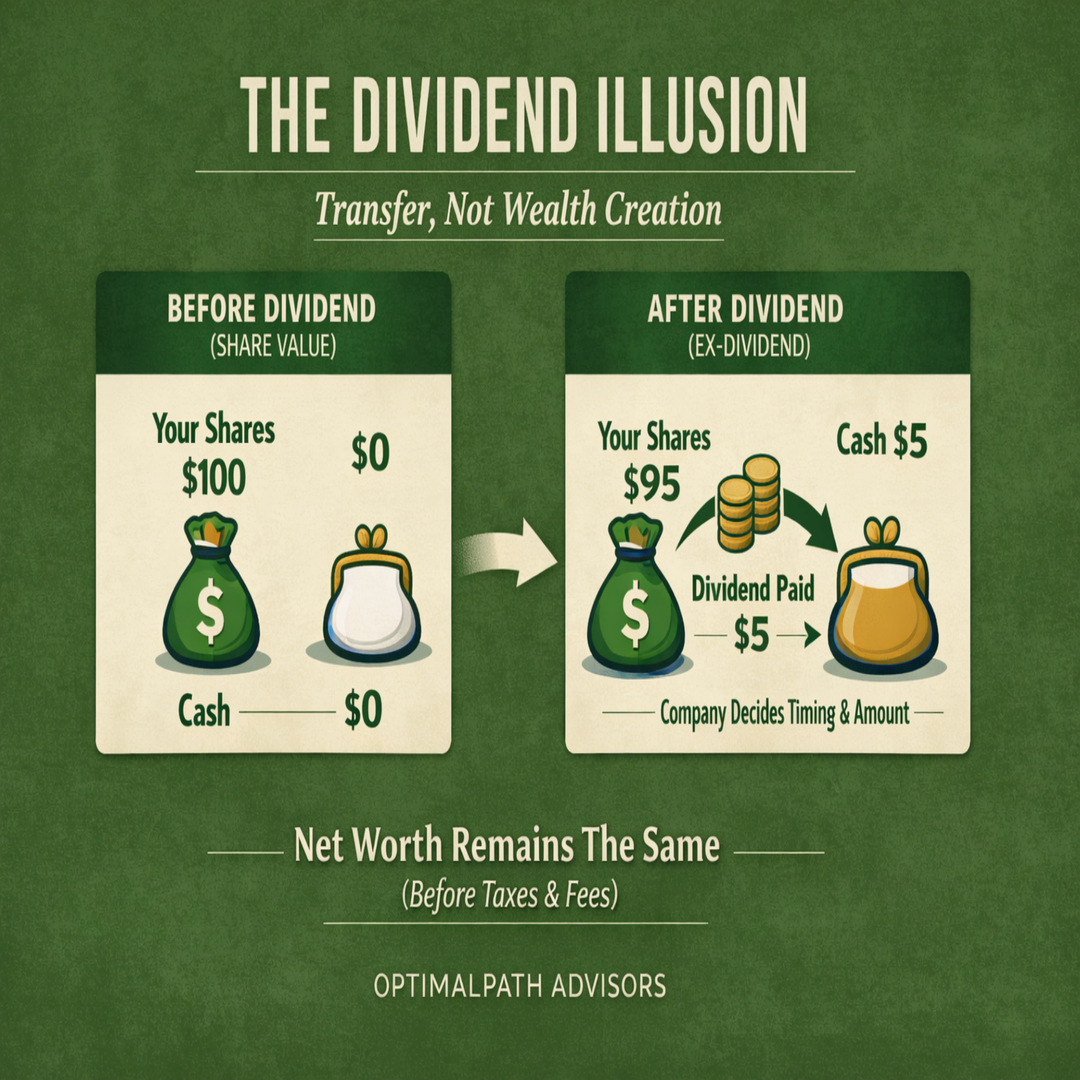
The Dividend Illusion: Why Chasing Yield Can Hurt Your Retirement
Dividend investing feels comforting—like a steady paycheck. But when you look at the mechanics of retirement funding, relying solely on high-dividend stocks can create hidden risks, reduce your tax flexibility, and stunt your portfolio's growth. Discover why total return, not just high yield, is the true driver of long-term retirement success.
When to Hire a Financial Advisor (A Guide for DIY Investors)
You don’t need an advisor to beat the market. You might need one to optimize your taxes, behavior, and withdrawals. We break down the research from Vanguard and Morningstar on where advice actually adds value (and where it doesn’t) for the sophisticated DIY investor.
Active vs. Passive Investing: How Hard Is It Really to Beat the Market?
Beating the market sounds simple, but the evidence says otherwise. This article breaks down why most professional active managers fail to outperform over time (SPIVA), why long-term market returns are driven by a small group of “superstar” stocks, and how behavioral traps and the “behavior gap” can quietly sabotage results. You’ll also learn the basics of how stocks are valued and why broad diversification is often the most reliable path for long-term investors.
U.S. Stocks vs International: Why Global Diversification Matters
Owning only U.S. stocks can quietly add single-country risk. A globally diversified portfolio spreads exposure across economies, currencies, and market regimes—without needing to predict who wins next.
Maximizing Returns Doesn’t Always Mean Better Outcomes
Higher expected returns don’t guarantee better real-life results. Here’s what happened to two retirees who started in 2000 vs 2003—and what it means for your allocation.
Tax Opportunities in Early Retirement: Roth Conversions vs Capital Gain Harvesting
Early retirement creates a rare tax window: low ordinary income but meaningful assets. Learn when to prioritize Roth conversions vs harvesting long-term capital gains (including 0% LTCG space, “return of basis,” ACA/SS impacts, and charitable/estate planning).

How Smart Financial Planning Can Help You Spend More Over Your Lifetime
Most people think financial planning is about saving the most. In reality, smart planning can help you spend more over your lifetime—through compounding, taxes, and timing.
Your Employer Stock Is Down—Now What? (An EMN/Eastman Example)
Employer stock is down? This post shares a rules-based framework to measure concentration risk, set a target, and de-risk tax-aware—using EMN/Eastman as an example.
Optimize vs. Maximize: Why “More” Isn’t Always Better in Your Financial Life
Good financial decisions aren’t about maximizing every metric. They’re about optimizing your plan so it supports flexibility, sustainability, and real life.

Building Your “Bridge to Social Security”
Want to retire before Social Security starts? Your “bridge years” between your last paycheck and your first benefit are critical. This post covers practical ways to fund that gap—bond and CD ladders, smart pension choices, cash buffers, and even using a HELOC as a backup—so you don’t derail your long-term plan.

FI Series # 10: Estate Planning for FI- a Playbook for Wealth Transfer
Protect your family and your FI plan. Learn how to use wills, POAs, revocable trusts, TOD/POD, lifetime gifting, DAFs/QCDs, and tax-smart wealth transfer.

FI Series # 9: Risk Management for Financial Independence: Insurance Guide
Risk management is like a lighthouse—helping you spot hidden dangers and safely navigate the uncertain waters of your financial life on the path to FI.

FI Series #8: Creating Your Retirement Paycheck After Financial Independence
Ready to live off your portfolio? This guide walks you through post-FI withdrawals, smart tax moves, and how to create your own retirement paycheck.

FI Series #7: Tax Optimization for Financial Independence
Yes, you can access retirement funds early—and with smart planning, you can do it tax-efficiently. Learn strategies like Roth ladders, Rule of 55, and more.

FI Series #6: How to Invest for Financial Independence
Building wealth for FI doesn’t require stock picking or timing the market. Learn how to invest with index funds, balanced allocation, and a stay-the-course mindset.

FI Series #5: Save Your Way to Financial Independence
Want to reach FI faster? Your savings rate—not your income or investment returns—is the most important factor. Learn how to raise it and shorten your path to freedom.

FI Series #4: Laying the Foundation for Financial Independence
The foundation of financial independence isn’t a number—it’s a mindset. Learn how to build lasting money habits, manage cash flow, and spend in line with your values.

FI Series #3 How to Calculate Your FI Number
Your FI number is the amount of money you need invested to make work optional. Learn how to calculate it using the 4% rule and tailor it to your lifestyle and future plans.

FI Series #2: What Is Financial Independence?
Financial independence isn’t about never working again—it’s about having the freedom to choose how you spend your time. Learn what FI really means and how it can look different depending on your goals.